
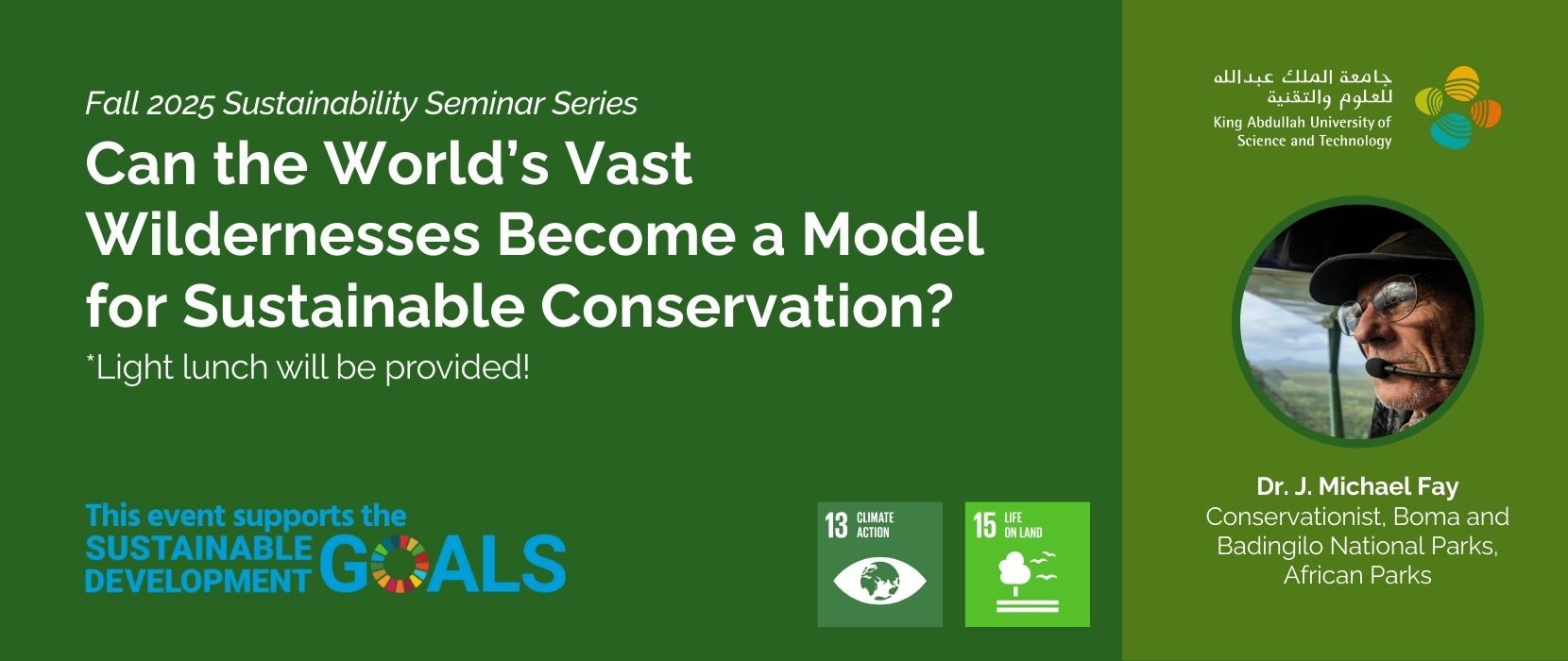
The Office of Sustainability invites you to a seminar on one of the world’s last great wildlife migrations and the ecological systems that sustain it. This talk highlights the ecological significance of this migration, the challenges of working in a fragile governance environment, and the emerging strategies for sustainably managing the region’s remarkable natural resources.
If you are a student studying ecology or the environment, a researcher examining biodiversity or resilience, a faculty member working on conservation or landscape management, or simply someone interested in wildlife and inspired by the beauty of biodiversity, then this session is for you.
Abstract
Global biodiversity is under increasing pressure as climate change and land degradation reshape natural habitats. Yet in South Sudan, despite decades of conflict, one of Earth’s greatest ecological treasures persists: the migration of more than six million antelope across one of the planet’s last large, intact savanna ecosystems.
For several years, explorer and conservationist Michael Fay has conducted extensive aerial surveys revealing a thriving landscape where wildlife, people, and natural systems remain deeply interconnected. His work documents not only the scale and significance of this migration, but also the ecological conditions that allow such a system to endure.
This seminar will explore the science behind this remarkable migration, the challenges of working in a fragile governance context, and the emerging strategies for sustainably managing these exceptional natural resources. The story of this region offers powerful lessons in conservation, resilience, and responsible stewardship, aligning with global efforts to protect biodiversity and sustain the planet’s remaining wild landscapes.
About the speaker
Mike Fay has spent his life as an explorer and naturalist. He has been working in the depths of the central African forest and savannas for the last 45 years. His experiences with wild places in Africa are extraordinary; his love of nature puts him at the center of on-the-ground conservation efforts wherever he goes.
Mike worked for the Wildlife Conservation Society from 1991 to 2021. He currently works for African Parks as the Landscape Coordinator of the Great Nile Migration Landscape of over 110,000 km2 in South Sudan. Mike is a specialist in the creation, institution-building, and management of large landscape-level conservation projects and protected area networks. Notably, he initiated the Megatransect project, which led him on a continuous 4,500 km walk to establish parks in the depths of the Congo Basin forests. He has been affiliated with National Geographic since 1985 and served as an NG Explorer from 2006 to 2022. He has worked with the Pristine Seas Initiative of National Geographic since its inception in 2009.
Trained as a botanist, after college, Mike headed to Tunisia and the savannas of the Central African Republic to do floristic studies but was drawn into a battle to save elephants and became a full-time conservationist. He received his PhD from the University of Washington in Saint Louis, for his research on the lowland gorilla population in the forests of the Central African Republic.
He is 69 years old, American, and lives and works only in Africa. He loves to explore wilderness on foot, fly planes low and slow, and skipper boats in remote places. He has been an avid fly-fisherman since the age of 15.