KAUST seeks to contribute to a more sustainable food cycle by raising awareness of the environmental impact of foods, fostering nutritional literacy, and enforcing food safety, all to help communities make healthier, more sustainable choices and reduce food waste. At KAUST, we are also committed to sustainable and safe food procurement. Our policy-level Supplier Code of Conduct and Food Safety and Quality Code ensure that all our suppliers adhere to stringent safety and sustainability standards, from sustainable harvest practices to responsible packaging and storage.
FOOD SAFETY AND RESPONSIBLE SOURCING
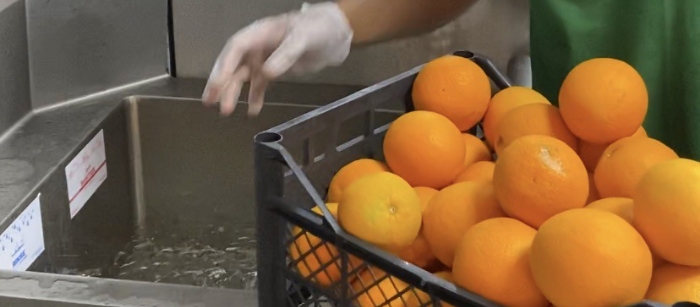
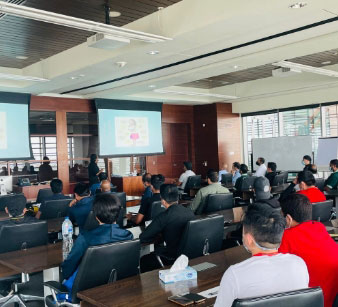
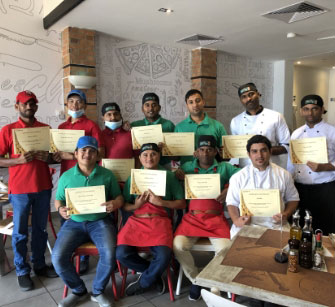
Food safety, quality and responsible sourcing are essential to the health and well-being of the KAUST community. KAUST’s Health, Safety and Environment (HSE) department oversees food safety and quality across campus through the implementation of its Food Safety and Quality Code, which establishes mandatory requirements for the safe handling, storage, preparation, transportation and distribution of food.
The Code applies to food service providers, retailers, vendors and catering services, with compliance supported through regular inspections, monitoring, training and awareness activities.
Alongside these requirements, KAUST’s Supplier Code of Conduct provides a broader framework for responsible sourcing and supplier practices. These considerations are relevant to food supplied on campus, including fish and seafood sourced from aquatic ecosystems, where responsible procurement is important for protecting both marine and land biodiversity and maintaining healthy ecosystems.
FOOD AND CLIMATE AWARENESS
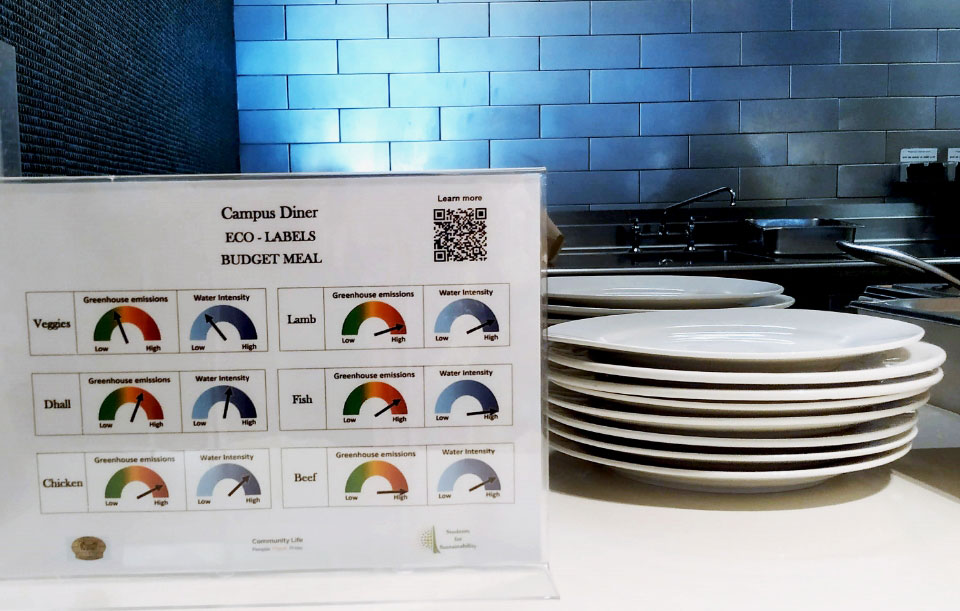
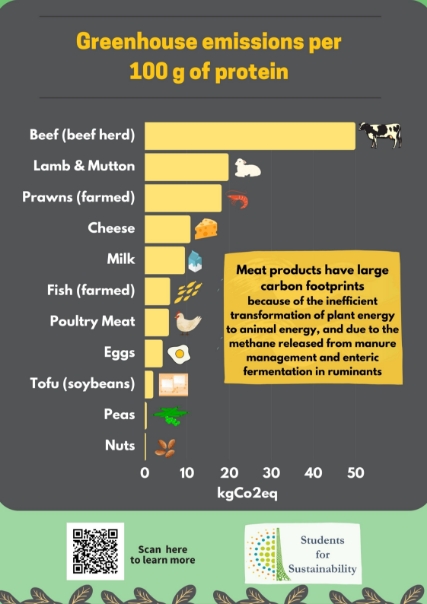
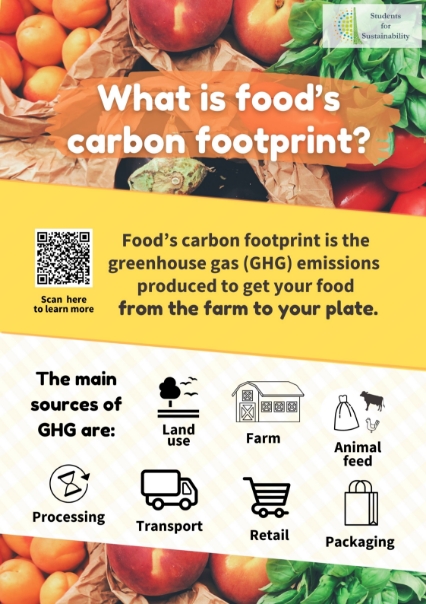
Improving sustainable food options and reducing food waste are key items on the Students for Sustainability’s agenda. In partnership with Community Life and KAUST service providers, the group created an eco-label system for the campus diner, as part of its Global University Climate Forum project.
These eco-labels accompany each food item and provide a visual guide to the water intensity and emissions generated to produce it.
By informing patrons about the impact their food choices make on the world’s environment and climate, eco-labels allow patrons to quickly make environmentally-informed decisions about what they eat.
For the same Global University Climate Forum project, students conducted a food audit that described and quantified food waste, surveyed KAUST diner patrons to assess their behavior and awareness, and identified critical actions.
Their results showed that portion size was the biggest determinant of food waste, leading the campus diner to introduce half-portions for selected meals.
NUTRITION LITERACY
EDIBLE EDUCATION PROGRAM
KAUST’s Edible Education Program promotes sustainable agriculture, healthy eating habits, and environmental awareness by integrating food education and plant science into K–12 curricula. First piloted at The KAUST School, the programme combines an edible garden, a dedicated school kitchen and interdisciplinary learning activities to engage students in the full lifecycle of food, from planting and harvesting to cooking and composting.
Building on its implementation at KAUST, the programme aims to expand its network of participating schools strengthening food and nutrition literacy, encouraging sustainable food choices and supporting healthier, more environmentally responsible communities across Saudi Arabia.
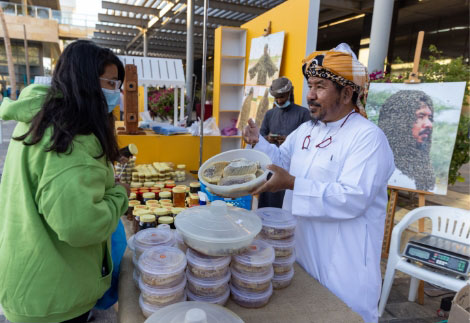
FOOD WORKSHOPS AND MARKETS
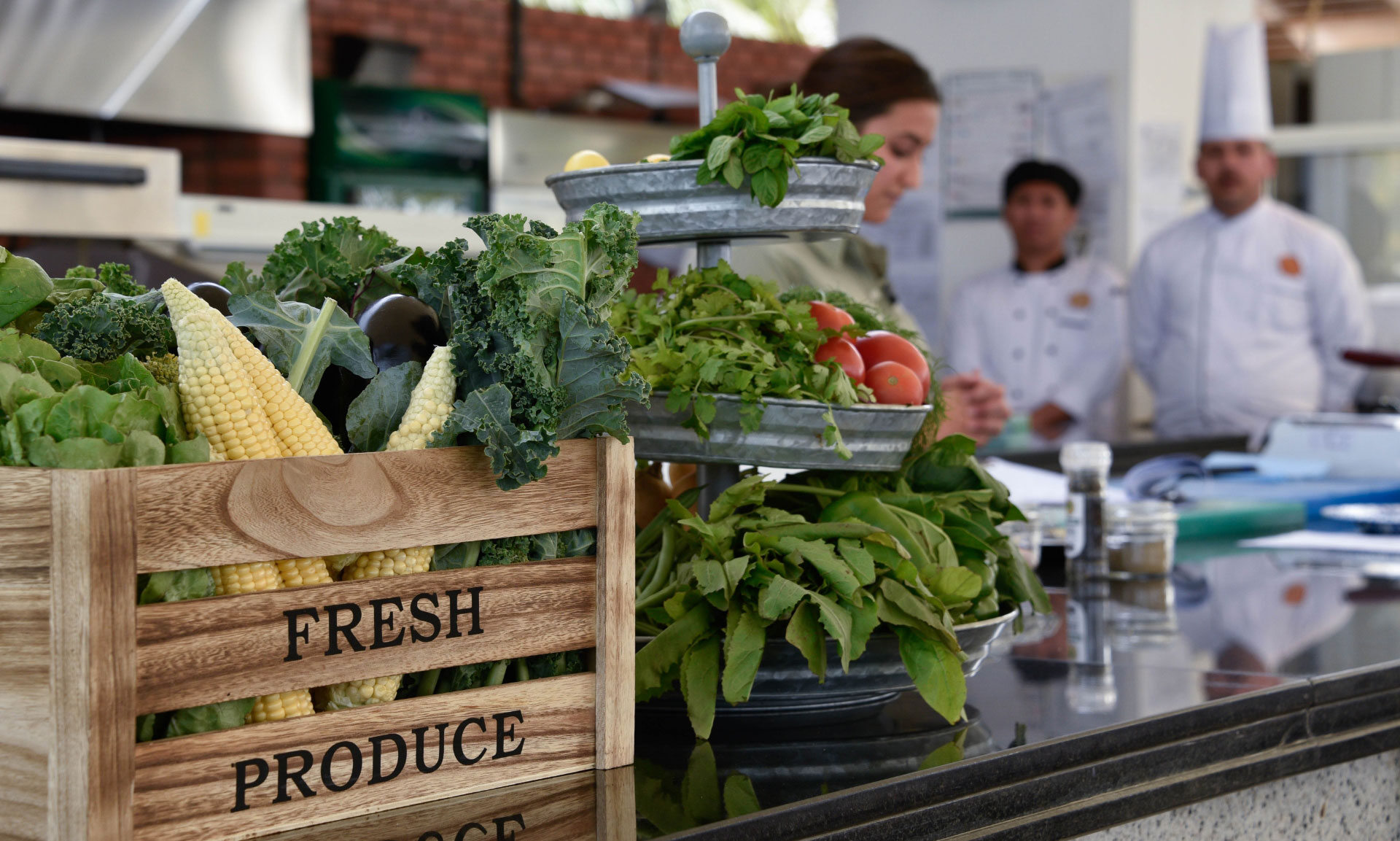
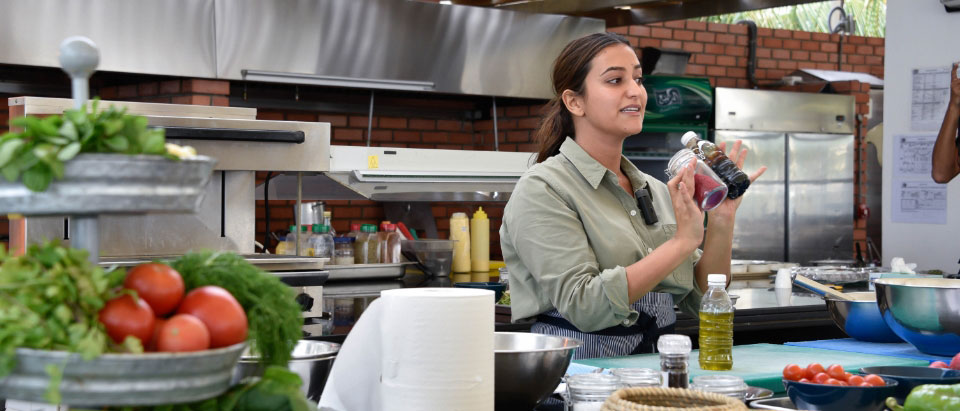
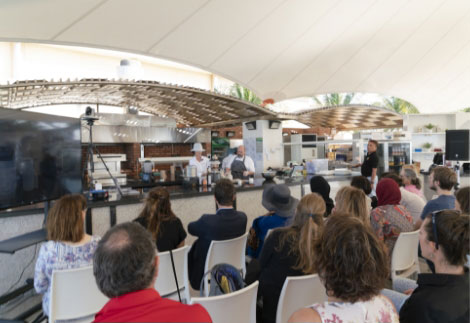
Several food-related events, from the World Food Day celebration to cooking workshops, provide an opportunity to demonstrate to KAUST residents and its neighboring communities why a healthy diet is important to them and to the planet.
Our residents also benefit from regular farmers’ markets and Green’s Fresh Produce shop, all offering a wide selection of locally-grown fresh produce and other food items.
Finally, the campus diner provides an array of healthy and cost-effective meal options catering to diverse dietary needs, all within a framework that emphasizes sustainability and flavor.
FOOD-RELATED GROUPS
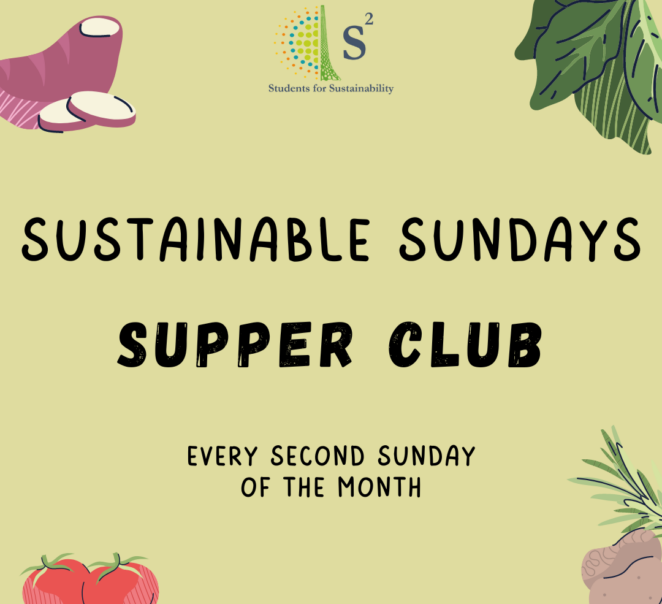
SUSTAINABLE SUNDAYS SUPPER CLUB
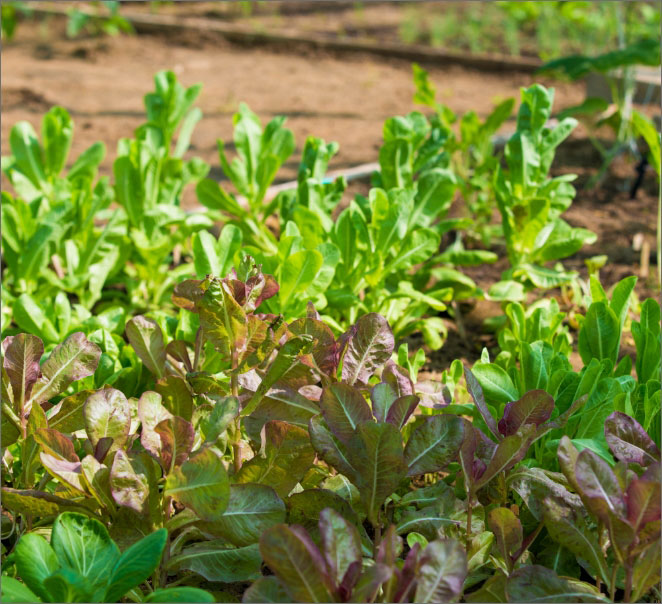
COMMUNITY GARDEN
At the Community Garden, community members can grow their own produce in a pesticide-free, organic environment and sustainably grow their own food. KAUST residents can rent one or more plots for a monthly fee, with access to water, tools, compost, and advice from fellow gardeners.